
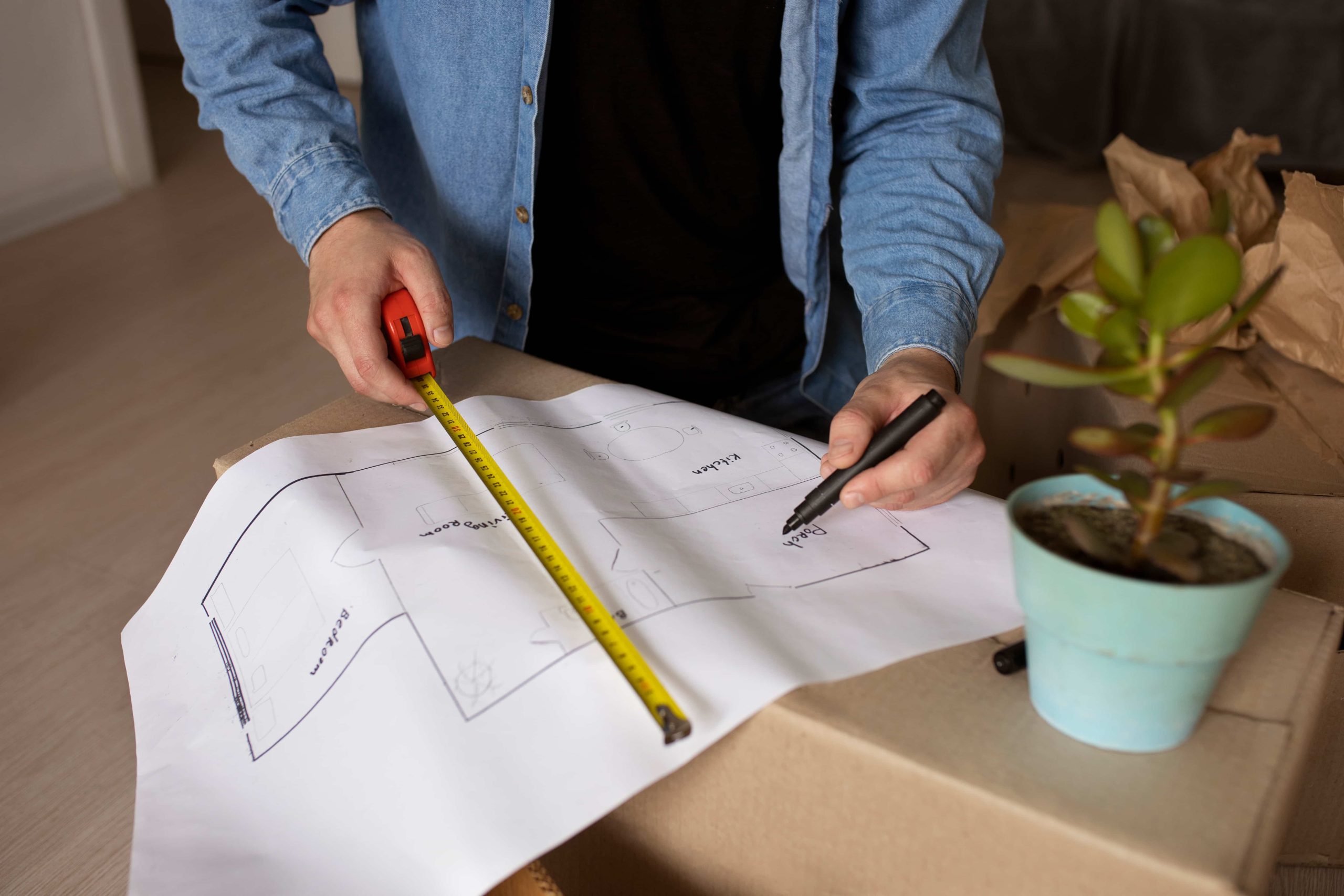
There’s a week left until moving day and you still don’t know whether you need a 20 or a 40 cubic meter truck. It’s a more common worry than it seems: miscalculating the volume of a move is probably the most frequent budgeting mistake among first-time movers. A tight calculation marks the difference between a move with no surprises and a day when the truck runs out of space halfway through loading.
You don’t need to be a removals professional to get it right. It’s enough to understand what a cubic meter of a move really measures and how to turn that figure into a reliable volume-based quote. In this article we go over the method, the most common mistakes, how the type of home affects it and what to do when the furniture inventory grows at the last minute.
Table of contents
- What move volume is and how it affects the quote
- How to calculate the cubic meters of your furniture and boxes
- How the type of home affects the final volume
- Common mistakes when estimating the furniture inventory
- What happens if the calculated volume doesn’t match on moving day
- Tips to fine-tune the planning of your move
- An accurate estimate starts by knowing your real volume
What move volume is and how it affects the quote
The volume of a move is the total space, measured in cubic meters, that your furniture, appliances and boxes take up inside the transport truck. It’s the unit that moving companies —including Mudanzas Trallero— use to work out both the vehicle needed and the final volume-based quote. The more precise that calculation, the less room there is for last-minute surprises.
A two-bedroom flat averages, on the whole, between 18 and 25 cubic meters of cargo, although the figure varies depending on the furniture and appliances included. Is the calculation the only thing that matters? Not exactly: the judgement used to measure each item weighs more than the final total.
Transport companies work with equivalence tables between items and cubic meters: a three-seater sofa takes up an average of 2 m³, a double bed with a base is around 1.5 m³ and a large fridge, close to 1 m³. Adding up each item in the home gives a fairly reliable figure, although some people still underestimate boxes and loose items.
That volume, moreover, determines much more than the size of the truck. It sets how many movers are needed, how long loading will take and, ultimately, how much the full service costs. That’s why it’s worth treating it as a serious figure from the very first quote, not as a rough number to be adjusted on the fly.
How to calculate the cubic meters of your furniture and boxes
Calculating the cubic meters of a move by hand isn’t complicated, although it does take patience. The most widespread method consists of noting down each large piece of furniture, multiplying its three dimensions —height, width and depth— and adding up the result for every item. The trick is not to forget the spaces that fill up with small objects.
Standard moving boxes usually hold between 0.1 and 0.15 m³. If you’re going to pack a full kitchen, count on at least fifteen or twenty medium boxes; for a bedroom with a large wardrobe, between eight and twelve. Multiply those figures by their unit volume and you already have a solid basis for your volume-based quote.
It’s also worth adding the so-called “loose items”: lamps, plants, bicycles, garden gear. They’re easily forgotten in the initial calculation and yet they take up real space in the truck. A loading miscalculation of barely two or three cubic meters can force a second trip.
Some people prefer to rely on a simple spreadsheet, one column per room, while others do it by hand in a notebook as they walk through the house. The method matters less than consistency: what’s truly useful is not leaving any room unchecked, including the storage room, the balcony or the garage if there are any.
How the type of home affects the final volume
Calculating the move volume of a 60-square-meter flat on a third floor with no lift isn’t the same as calculating that of a house with a garden and garage. The floor area gives a rough idea, but the real volume depends more on the amount of accumulated furniture than on the size of the rooms.
Homes lived in for many years by the same family tend to surprise on the high side: wardrobes that have gradually filled up, storage rooms with items from past seasons, garages turned into an improvised warehouse. Calculating only from the built floor area is, in these cases, a common source of error.
Access also enters the equation, even if it doesn’t change the volume itself. A top-floor flat with no lift or a street where the truck can’t park nearby forces you to rethink times and resources, even if the calculated volume is correct on paper.
Common mistakes when estimating the furniture inventory
The most repeated mistake is to rely on memory instead of walking through the house room by room. Trusting your memory sounds reasonable until that storage room, that glassed-in terrace or that loft no one remembered turns out to be full of boxes from previous seasons.
Another typical error is calculating with the house half emptied. If you’ve already donated or sold part of the furniture when you draw up the furniture inventory, the result isn’t much use on the actual loading day, because in the meantime new purchases or last-minute gifts tend to appear.
Mixing different units doesn’t help either —boxes on one side, furniture on the other, with no common criterion— because the margin of error shoots up. And some people, in a rush, round everything down. That habit, so very human, is the one that causes the most headaches later.
What happens if the calculated volume doesn’t match on moving day
When the real volume exceeds the estimate, the moving team faces two options: cramming the cargo into the planned vehicle, with a risk to fragile items, or arranging a second trip that pushes up the cost and delays delivery. Neither is comfortable for anyone.
That’s why serious companies —and here Mudanzas Trallero is no exception— prefer to carry out a pre-move survey or ask for detailed photos before finalizing the volume-based quote. That step, which some clients see as an extra formality, is exactly what prevents last-minute adjustments. A simple video call walking through the house is usually enough to fine-tune the figure without having to coordinate an in-person visit.
If you notice that your inventory has grown —a move is never just boxes, it’s also the things you buy while packing— the most honest thing is to let us know in advance. An adjustment communicated in time costs far less than a surprise on loading day.
Some clients, on the contrary, overestimate the volume and end up paying for a bigger vehicle than they really need. That isn’t ideal either: an overly generous estimate benefits no one, not even the transport company, which prefers to allocate resources precisely.
Tips to fine-tune the planning of your move
Planning your move improves quite a bit if you divide the house into zones and check each one separately: kitchen, bedrooms, living room, outdoor areas and storage. Photographing each room before you start packing helps you not forget items that later turn up hidden in a high cupboard.
It’s also worth deciding in good time what to donate, what to sell and what to keep. Reducing volume before the move not only makes transport cheaper: it also makes the new home easier to organize from day one.
A figure that surprises many clients: an average home can store furniture and belongings equivalent to between 20 and 35 cubic meters, a wide range that depends on the size of the family and the years lived in the same flat. Calculating it with some margin, without falling short or overdoing it, is the difference between a realistic quote and one that turns out to be worthless.
It also helps to set a date with a reasonable margin, avoiding the last days of the month —the most in demand because they coincide with the end of many rental contracts— if your situation allows. Choosing a mid-month date usually translates into more team availability and, sometimes, better price conditions.
And if you have doubts about a specific item —a piano, a safe, a work of art— mention it separately from the very first contact. Those kinds of pieces don’t fit the standard cubic-meter tables and need a specific assessment before finalizing any figure.
An accurate estimate starts by knowing your real volume
Every move is different, and calculating the volume of a move is the starting point for any serious quote you can trust. If you’d rather not do the math by hand or simply want a reliable figure before deciding on a date and truck, there’s a faster way to sort it out.
Request an assessment tailored to the real volume of your move




