
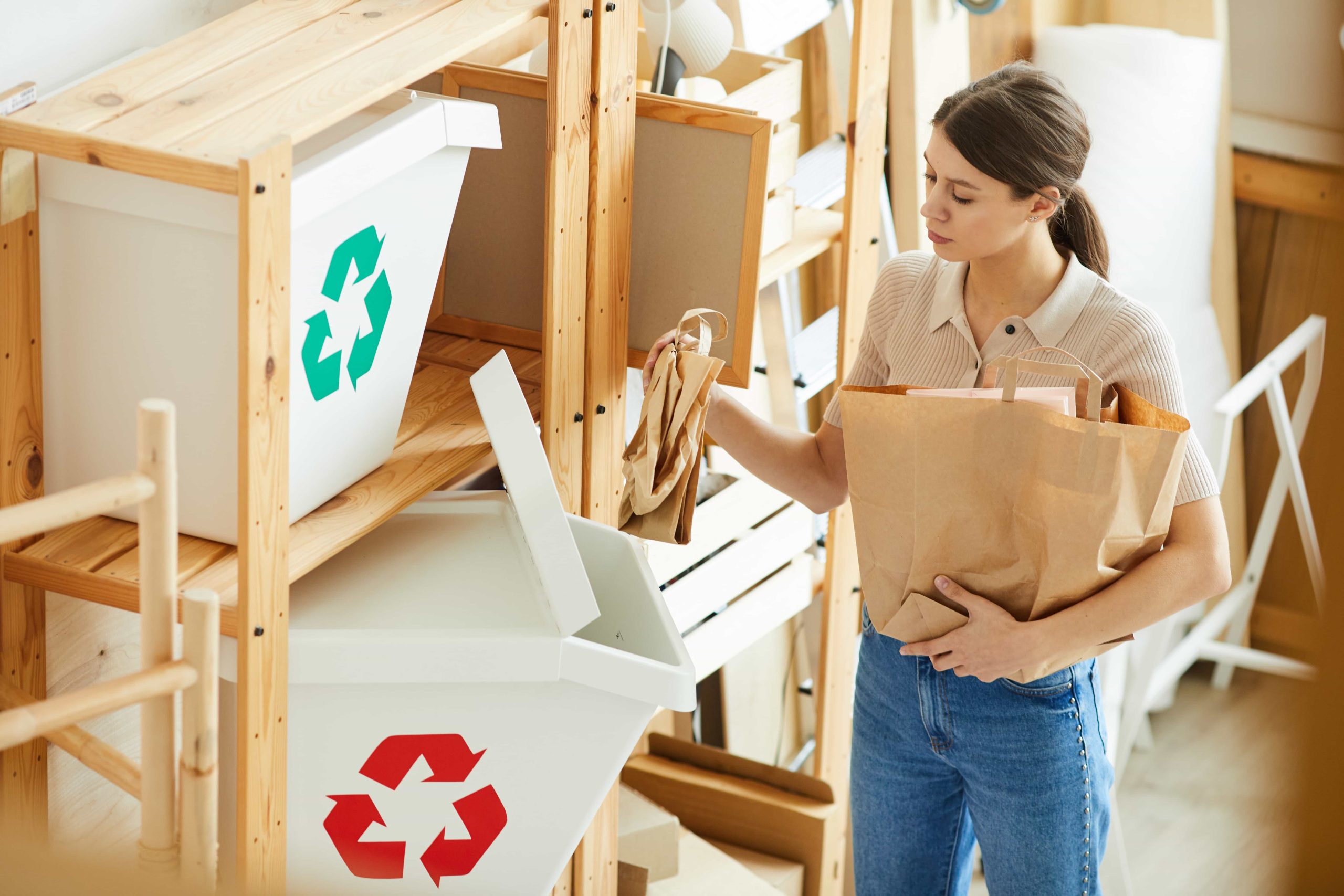
You’re about to move and, as someone who cares about the environment, unsettling questions come to mind: how much fuel will the moving truck burn? Is it better to make several trips with a small vehicle or one trip with a large truck? Will packing materials end up polluting the planet for decades? Is there really such a thing as a “sustainable move”? In an age when every consumer decision is scrutinised through the lens of sustainability, moving has become a field full of myths, half-truths and widespread confusion about which practices are genuinely eco-friendly and which are simply greenwashing in disguise.
The reality is that house moves, by their very nature, pose a complex sustainability challenge. They involve heavy transport, single-use materials and, often, the disposal of items that still have plenty of life left. Yet they also offer a unique chance to rethink our consumption habits, optimise resource use and make choices with positive long-term environmental impacts. The trick is to separate fact from fiction, real solutions from well-meaning illusions, and to understand that sustainability in a move is far more complex and nuanced than most people imagine.
The small-vehicle myth versus the reality of logistics efficiency
One of the most persistent myths around sustainable removals is the belief that using smaller vehicles is automatically greener. This assumption, however intuitive, completely ignores the basic principles of logistics efficiency and can actually cause a significantly larger environmental impact. The truth is that transport sustainability is measured by energy efficiency per unit moved, not by the absolute size of the vehicle.
A large, modern removals truck can carry the entire contents of a home in a single trip, whereas several trips with small vans can generate three or four times more CO₂ emissions for the same load. The modern diesel engines in large trucks are optimised for heavy loads and run more efficiently when fully laden. What’s more, a single trip means one planned route, one driver and a time saving that translates directly into lower fuel consumption.
The key is making the best use of the loading space. A half-empty large truck is effectively less sustainable than several fully loaded small vehicles, but in practice professional removals optimise the available space using specialised loading techniques that maximise efficiency. This optimisation isn’t just about fitting in more items; it’s a science that factors in weight, distribution and protection of your belongings while minimising the total volume required.
The packing-materials paradox: protection versus sustainability
Packing is one of the thorniest dilemmas where moving and sustainability meet. On one hand, properly protecting your belongings in transit is essential to avoid damage that would lead to waste and needless replacements. On the other, traditional packing materials — bubble wrap, adhesive tape, protective foam — are mostly single-use and can take decades to biodegrade.
The reality is that the sustainability equation has to account for the total environmental cost, not just the immediate impact of the packing materials. An item damaged during a move because of inadequate packing isn’t only a financial loss; it wastes all the resources that went into making it in the first place, plus the extra resources needed to replace it. In many cases, the environmental impact of replacing a damaged item far outweighs that of using single-use materials to protect it properly.
That said, this doesn’t mean we should resign ourselves to traditional materials without exploring alternatives. The industry is constantly developing more sustainable packing options: biodegradable foams made from corn starch, bubble wrap made from recycled material, water-based adhesive tapes instead of solvent-based ones, and reusable packing systems for certain items. The challenge is identifying which of these alternatives offer equivalent protection without compromising the safety of your belongings.
The circular economy applied to moving: beyond basic recycling
The idea of a circular economy in moving goes far beyond simply recycling cardboard boxes after the move. It’s a systematic approach in which every material and resource used is considered within an extended life cycle that minimises waste and maximises resource use. This perspective fundamentally changes how we think about a sustainable move.
Reusable plastic crates are a direct application of circular-economy principles. Although they require a higher upfront investment and are heavier, which can slightly increase fuel consumption, a sturdy plastic crate can be used across hundreds of moves over its lifetime. The environmental maths works out favourably once the manufacturing impact is spread across many uses, especially since crates eliminate the need for adhesive tape and greatly reduce packing and unpacking time.
Moving-material exchange systems are emerging as innovative circular-economy models. Platforms where packing materials in good condition can be passed between people moving on different dates create reuse networks that maximise the value of every item produced. These systems recognise that most moving materials are used intensively for very short periods and then sit idle until they’re thrown away.
The hidden impact of waste during a move
Moves generate surprising amounts of waste that go well beyond packing materials. Studies suggest the average household discards between 10% and 30% of its belongings during a move, creating waste streams that include furniture, appliances, clothes, books and decorative items that are often in perfectly usable condition. This waste is not only a disposal problem but also a massive squandering of the resources embodied in those items.
The “might as well replace everything” mindset that accompanies many moves can be financially tempting but environmentally devastating. Furniture discarded during moves often ends up in landfill, where it takes up significant space and can release chemicals as it breaks down. Working appliances swapped for newer models represent wasted metals, plastics and electronic components that took resource-intensive processes to manufacture.
Even so, moves also offer unique opportunities for the efficient redistribution of goods. The timing of a move creates windows in which unwanted items can pass directly to new users without going through storage or redistribution systems. Digital platforms are making these transfers easier, letting furniture and household goods find new homes right when their previous owners need to part with them.
Technology and route optimisation: the quiet efficiency revolution
Technology is quietly transforming the sustainability of moves through smart route optimisation, efficient resource coordination and fewer empty trips. Modern logistics management systems can coordinate multiple moves to maximise vehicle use, reduce total distance travelled and minimise downtime for crews and equipment.
Route optimisation goes beyond simply finding the shortest path between two points. Modern algorithms factor in real-time traffic patterns, weather conditions, heavy-vehicle restrictions and even topography to identify routes that minimise fuel consumption. A truck that avoids steep climbs or heavy traffic can cut its fuel use by 15% to 20% compared with seemingly more direct routes.
Load-coordination systems allow several moves to share space in the same vehicle when routes and schedules line up. This “load consolidation” can dramatically reduce the environmental impact per individual move, especially on long-distance moves where trucks traditionally travel only part-loaded. Technology makes it possible to coordinate these complex operations while keeping each move secure and traceable.
The false trade-off between speed and sustainability
There’s a widespread belief that sustainable moves necessarily take more time, more planning and compromise convenience. This belief creates a false trade-off between operational efficiency and environmental responsibility that doesn’t reflect the reality of well-implemented sustainable practices. In fact, many sustainable moving practices deliver greater efficiency, lower overall cost and a better customer experience.
Advance planning, which is fundamental to a sustainable move, also makes operations smoother and more predictable. When routes are optimised, materials are coordinated and the handover of unwanted items is planned, moving day runs with fewer surprises, fewer delays and less stress for everyone involved. Sustainability and operational efficiency are natural allies, not adversaries.
Sustainable packing materials, when chosen well, can cut packing and unpacking time. Reusable crates need no assembly or tape, biodegradable protective materials are often easier to use than traditional alternatives, and optimised labelling systems make organisation easier during unpacking.
Green certifications: navigating marketing versus reality
The surge of interest in sustainability has produced a proliferation of certifications, seals and “green” claims in the removals sector, ranging from genuine commitments to superficial marketing. As a conscious consumer, you need tools to tell apart companies that have made substantial changes to their operations from those that have simply adopted eco-friendly language without any meaningful change.
Legitimate environmental certifications require independent audits, measurement of specific metrics and ongoing improvement commitments that go beyond statements of intent. Certifications such as ISO 14001 for environmental management, or participation in verifiable emission-reduction programmes, point to institutional commitments reflected in real operational procedures.
That said, the absence of formal certifications doesn’t necessarily mean a lack of environmental commitment. Many companies, especially smaller ones, implement crucial sustainable practices without pursuing costly certifications. Specific questions about concrete practices — the types of fuel used, material recycling programmes, vehicle maintenance policies, route optimisation systems — can reveal more about a company’s genuine commitment to sustainability than any seal.
Emerging innovations: the future of sustainable moving
The removals sector is undergoing innovations that promise to radically transform its environmental profile in the coming years. Electric vehicles for urban moves are starting to become viable for certain types of relocation, especially in cities where distances are shorter and charging infrastructure is developing fast.
Biofuels and synthetic fuels are emerging as alternatives for heavy long-distance vehicles, where electrification isn’t yet practical. These fuels can significantly cut carbon emissions using the existing vehicle fleet, offering a more accessible transition towards more sustainable operations.
Bio-based packing materials are evolving quickly, with advances in foams made from seaweed, protective materials made from agricultural waste and fully compostable packing systems that retain the protective properties needed for safe moves. These innovations are closing the gap between effective protection and environmental sustainability.
Shared responsibility: your role in a sustainable move
Sustainability in a move isn’t the sole responsibility of removals companies; it requires customers to take an active part in decisions that span from planning to execution. Your role starts with an honest assessment of which items you genuinely need to move versus which could be put to better use in someone else’s hands.
Advance preparation makes it possible to apply sustainable practices that would be impossible with last-minute planning. Arranging the donation or sale of unwanted items, researching sustainable packing options and planning efficient routes all take time that’s only available if you start the process early enough.
Your decisions about timing also affect how sustainable your move is. Moving on lower-demand days allows better optimisation of routes and resources, whereas moving during peak periods may require additional resources that increase the total environmental impact.
Measuring real impact: the metrics that matter
Assessing the sustainability of a move calls for specific metrics that go beyond general impressions. Fuel consumption per kilometre per cubic metre moved provides a measure of energy efficiency that allows objective comparisons between different moving approaches.
The amount of packing material used, its composition and its final destination after the move are tangible metrics of material impact. The ratio of reusable to single-use materials, the recycled content of new materials and the availability of recycling or composting options at the end of their life are concrete sustainability indicators.
Waste avoided through donations, sales or handovers during the moving process is perhaps the most meaningful metric of positive environmental impact. Every item that finds a productive new use instead of ending up in landfill is a measurable success in circular-economy terms.
Building a more sustainable future, one move at a time
Sustainability in moving isn’t a final destination but a process of continuous improvement that requires commitment from both sector companies and conscious consumers. Separating myth from reality, adopting efficient technologies and implementing circular practices are creating a new paradigm in which moves can be significantly more sustainable without compromising service quality.
Mudanzas Trallero has built sustainability principles into its operations through technology-driven route optimisation, the use of packing materials with recycled content and coordination programmes that maximise resource efficiency. With more than a century of experience in the sector, they understand that sustainability isn’t a passing fad but a necessary evolution towards more efficient and responsible operations. Their commitment to sustainable innovation is reflected in ongoing investment in clean technology, team training in efficient practices and collaboration with suppliers who share the same environmental values. When you choose a mover, you’re also choosing the kind of future you want to support. Discover how they can make your move as sustainable as it is successful with Mudanzas Trallero, and be part of building a removals sector that’s kinder to the planet.




