
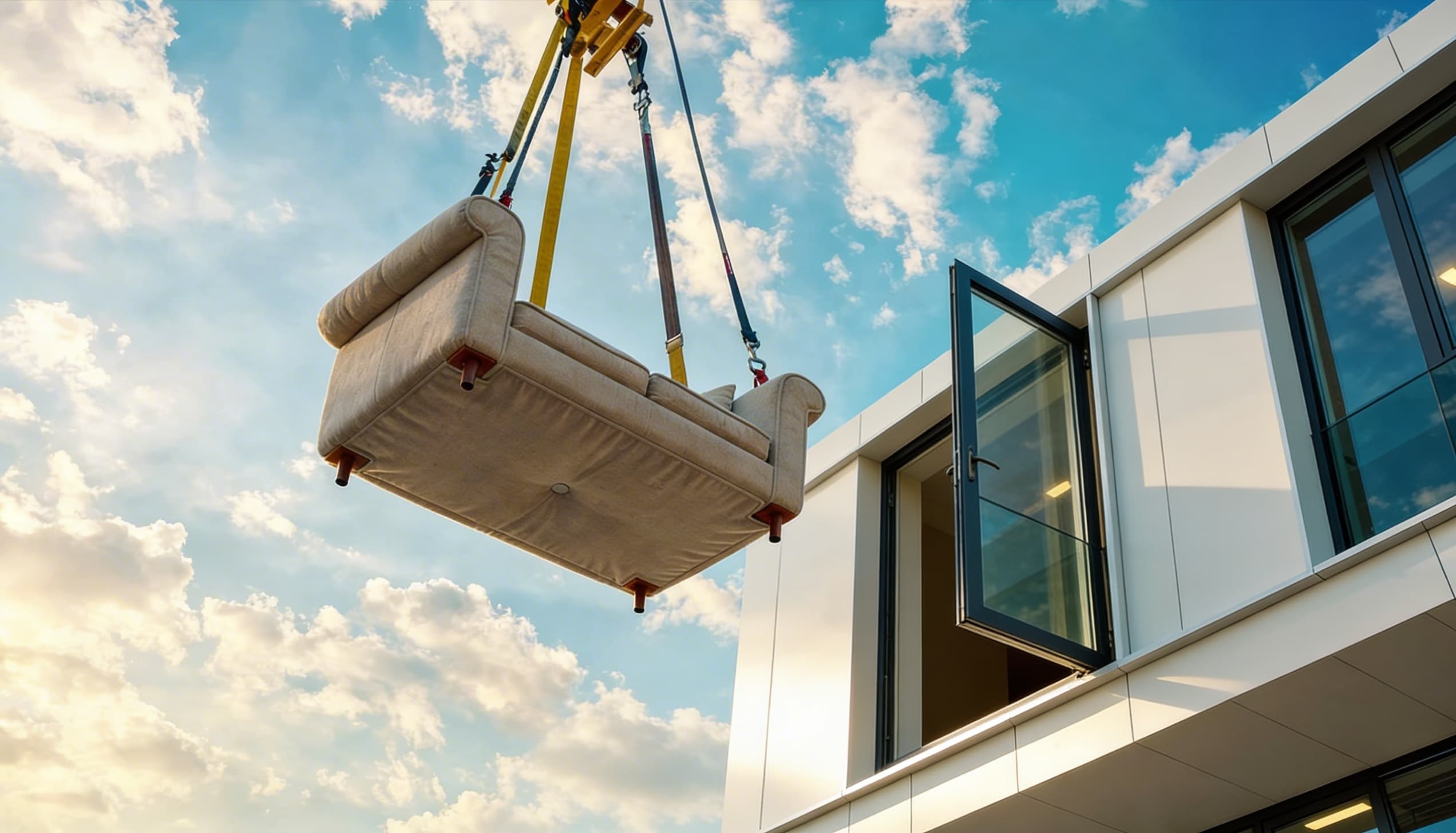
Some moves look impossible right from the landing. An oversized L-shaped sofa, a wardrobe that won’t fit in the elevator, a fifth-floor flat with no lift and a staircase that’s simply too narrow. In these cases, the answer isn’t to try anyway and risk damaging the furniture or injuring someone. The answer is to use the right lifting system: a crane, a lift platform or a furniture hoist, depending on the situation and the access available.
Signs your move needs technical support
The clearest sign is that there’s no way to get a piece down the stairs or out through the elevator without damaging it or without a disproportionate effort. This often happens with L-shaped sofas, oversized double beds, wardrobes over two meters (about 6.5 feet) tall, side-by-side refrigerators or pianos. If the piece doesn’t fit, the answer isn’t to force it.
A furniture hoist is also needed when access to the building is tricky, even if the items do fit in the elevator: narrow streets, entrances with no room to maneuver, spiral staircases or top-floor flats with no suitable interior access.
It’s also needed when bulky items have to go up to high floors and manual handling would put people or the building itself at risk.
There’s a third scenario many people don’t anticipate: when the moving truck can’t park by the door and the distance from the load to the vehicle is excessive. In those cases, a lift platform lets you optimize loading from a safer, more accessible position, cutting the total time of the move.
What types of lifting systems exist
The moving crane is the best-known option: it’s set up in the street and lets you raise or lower items directly up the building’s facade. The lift platform works in a similar way, but with a wider surface that lets you move several items at once, which speeds up the process considerably on large-volume moves.
The furniture hoist is a rail system that adapts to the staircase and lets you slide heavy pieces without needing extra labor. It’s especially useful when the street has no room to set up an outdoor crane or when facade access isn’t viable.
Knowing which one you need means assessing the real access, the weight and dimensions of the items, and the space available in the street. In areas with traffic restrictions or limited parking, a municipal permit may be required in advance. A specialized company can carry out that preliminary assessment and handle all the paperwork so you don’t have to worry about a thing.
When to arrange it and why doing it early pays off
Applying for permits to set up a crane or lift platform on public roads involves administrative timelines that vary by municipality. In cities like Barcelona, obtaining that permit can take several business days. If the move is planned at the last minute, there may not be time to process it and the technical solution may no longer be viable.
Planning ahead also lets you book the equipment in good time. During high-demand seasons, such as the summer months or the first few days of each month, lifting systems have waiting lists. If they aren’t booked with enough margin, they may not be available on moving day.
If you think your move might involve tricky access, would you like a quote for your move with a furniture hoist? Click here and get a technical assessment before the move.




