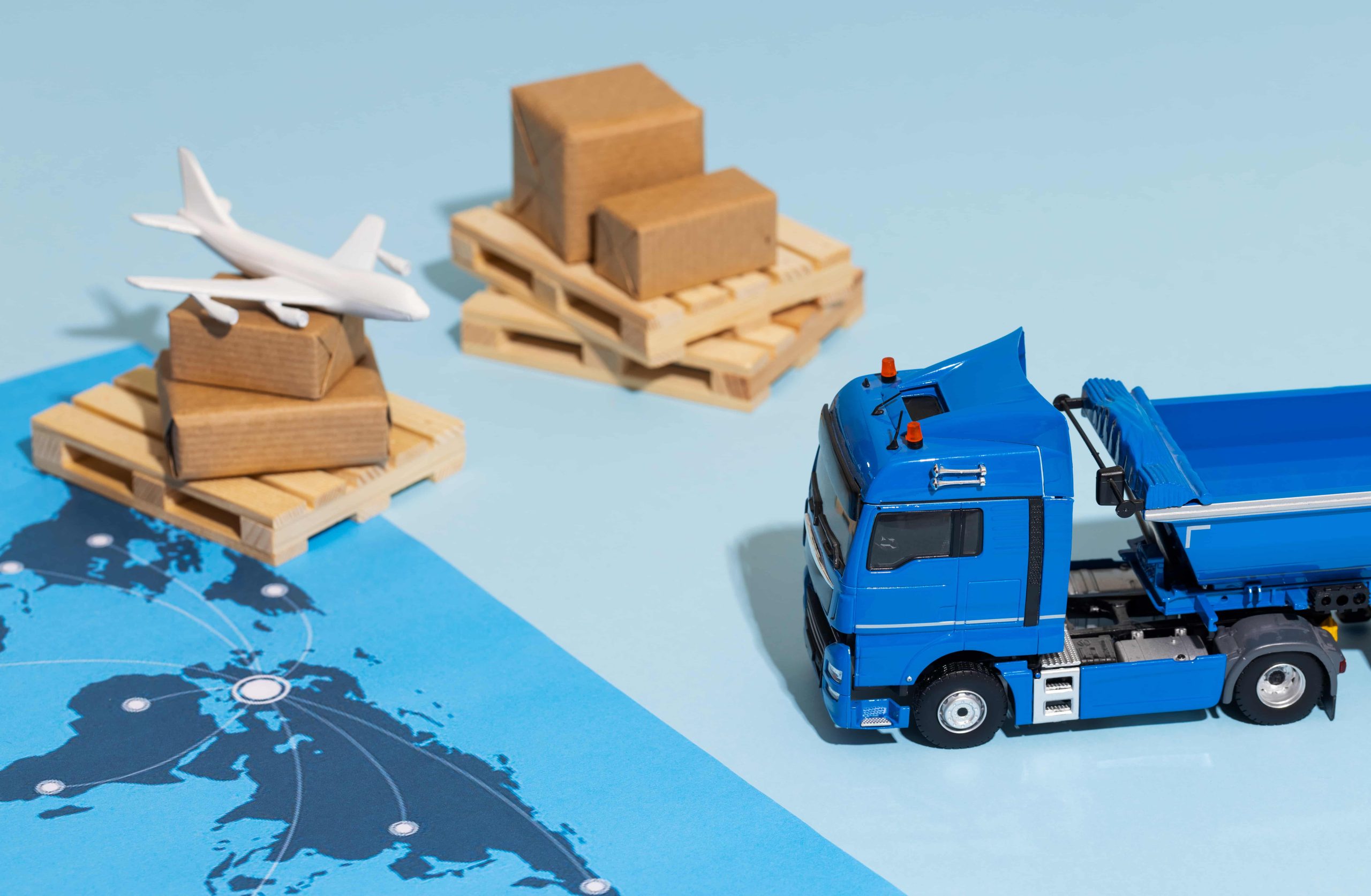
You pictured the move as the start of something new. Then came the question no one warns you about: how do I ship all of this to the other side of the world? It is no small decision. The type of transport you choose for your international move can make the difference between arriving with everything on time or spending months in an empty home.
Transport for an international move does not have a single answer. It depends on how much you are shipping, where you are heading, how quickly you need to arrive and how much you are willing to invest. Each option —sea, air or road— has a very specific profile, and choosing well from the start saves you nasty surprises, extra costs and more than one headache.
According to figures from Spain’s National Statistics Institute (INE), in 2025 more than 137,000 Spanish nationals emigrated abroad. Every one of them had to solve this same dilemma. And the experience of those who have been through it confirms something we professionals in the sector know well: the choice of transport is not a detail, it is the backbone of the whole move.
→ What determines your transport choice in an international move
→ Sea freight: volume, containers and timings
→ Air freight: speed when time is tight
→ Road transport: the door-to-door option within Europe
→ When it pays to combine transport modes
→ Customs procedures: what you need to know before you leave
→ How to get the choice right
What determines your transport choice in an international move
Before talking about ships, planes or trucks, you need to ask yourself four specific questions.
First: how much volume of belongings do you have? A small studio does not require the same as the contents of a four-bedroom flat.
Second: what is your destination? Moving to France is not the same as moving to Mexico or Australia.
Third: the timeframe changes everything too. If you have two weeks to arrive with your things, your options shrink dramatically. If you can wait two or three months, the range opens up.
Fourth: the budget, of course, acts as the final filter: there are very affordable options for large volumes and very fast options that come at a high price.
The combination of these four factors —volume, destination, timing and cost— is what defines which option best fits your situation. There is no perfect choice for everyone; there is the right choice for you.
Sea freight: volume, containers and timings
If you are moving with the full contents of a flat or a house, sea freight is usually the most cost-effective option. Cargo ships let you move large volumes at a cost per cubic metre far lower than air freight. The equation changes when the volume is small, but for full household moves, the sea wins.
There are two basic ways to ship your belongings. A dedicated container (FCL, Full Container Load) reserves the entire capacity for your move: no one else shares the space and timings are more predictable. Groupage or a shared container (LCL, Less than Container Load) groups your load with that of other people heading to the same destination; the cost drops, but the timings can stretch out a little more.
The main drawback of sea freight is time. A move to Latin America can take between three and eight weeks, depending on the destination port. To Australia or Japan, even longer. If you can organise your arrival in advance and do not need your things on day one, this option is hard to beat in terms of cost-efficiency.
At Mudanzas Trallero, packing for sea freight is especially careful: humidity, movement on the open sea and temperature changes call for specific materials. Packing for a truck is not the same as packing for a container crossing the Atlantic.
Air freight: speed when time is tight
There are situations where there is no room to wait. An urgent job start, a visa with a deadline, a family that cannot go without their belongings any longer than necessary. In those cases, the plane is the answer.
Air freight for international moves is, by far, the fastest: shipments can arrive within days. But it comes with two important limitations you have to accept from the outset. The first is cost: air freight can be between five and ten times more expensive than sea freight per cubic metre. The second is volume: it is not designed to move the contents of a whole house.
When does air freight make sense for a move? When the volume is small —documents, clothing, essential personal items, work electronics— or when the destination has no reasonable direct sea access. Also as a complement: sending the urgent items by plane and the bulk of your belongings by sea or road.
Road transport: the door-to-door option within Europe
For moves within Europe, the truck is still king. The reason is simple: road transport offers genuine door-to-door service, with no transfers, no intermediate ports and very manageable timings. A move from Barcelona to Berlin, for example, can be handled in three or four days.
Trucks specialised for removals are fitted with securing systems, protective blankets and, in some cases, built-in tail lifts. Direct loading and unloading eliminates unnecessary handling and reduces the risk of breakages. For European destinations, it is the most balanced option in terms of cost, timing and safety.
Another point in favour of road transport is the flexibility of dates. Sea routes are tied to ship departures, which may run weekly or fortnightly. With a truck, planning is far more adaptable to your personal schedule.
When it pays to combine transport modes
Few people know this, but combining transport modes is a common practice in complex international moves. The most frequent case: sending the urgent, essential items by plane —documents, computers, clothing for the first few weeks— and the rest by sea or road.
It can also make sense on routes with long overland stretches to the port of departure, or for island destinations where the truck covers the mainland leg and the ferry or ship completes the move. The key is coordination: making sure the different shipments arrive in the right order, so you are not left waiting weeks with just the basics in a suitcase.
Planning this combination well takes experience. A mistake in the customs paperwork for one shipment can delay everything else. That is why working with a specialist company like Mudanzas Trallero makes all the difference.
Customs procedures: what you need to know before you leave
Customs procedures are perhaps the most underrated aspect of an international move. And they are often the source of the most frustrating delays. Every country has its own rules on what can be imported, what documentation is required and what fees apply.
Within the European Union, moving personal belongings between member states does not trigger customs procedures as such. But as soon as the destination is outside the EU —Latin America, the United States, Asia, Australia—, the situation changes completely. Some countries require a detailed, valued list of every item. Others require proof that you have lived in the country of origin for at least a year.
Certain goods carry special restrictions: food, plants, specific materials, artwork, antiques. Knowing these rules before you pack can save you from goods being held at customs or even lost. Mudanzas Trallero advises you on the documentation needed for each destination and handles the procedures so you do not have to tackle international bureaucracy from scratch.
How to get your international move transport choice right
There is no magic formula, but there is a reasoned way to reach the right decision. If you are moving within Europe, start with the truck. If the destination is outside the continent and you have a significant volume, the ship is probably your best ally. If time is the biggest pressure and the volume is manageable, the plane comes into play.
Always ask for a detailed inventory before accepting any quote. Any serious company needs to know what you are shipping to give you a realistic price. Be wary of fixed quotes with no survey or prior inventory: problems usually show up later.
Check the insurance too: basic transport insurance does not always cover the real value of your belongings. For international moves, especially with valuable items, specific insurance is an investment worth considering.
And above all, let the professionals at Mudanzas Trallero guide you. A company specialised in international move transport knows the destinations, the real timings, the procedures and the surprises that can come up. That knowledge has a concrete, measurable value.
Request a quote and choose the international option that best fits you.