
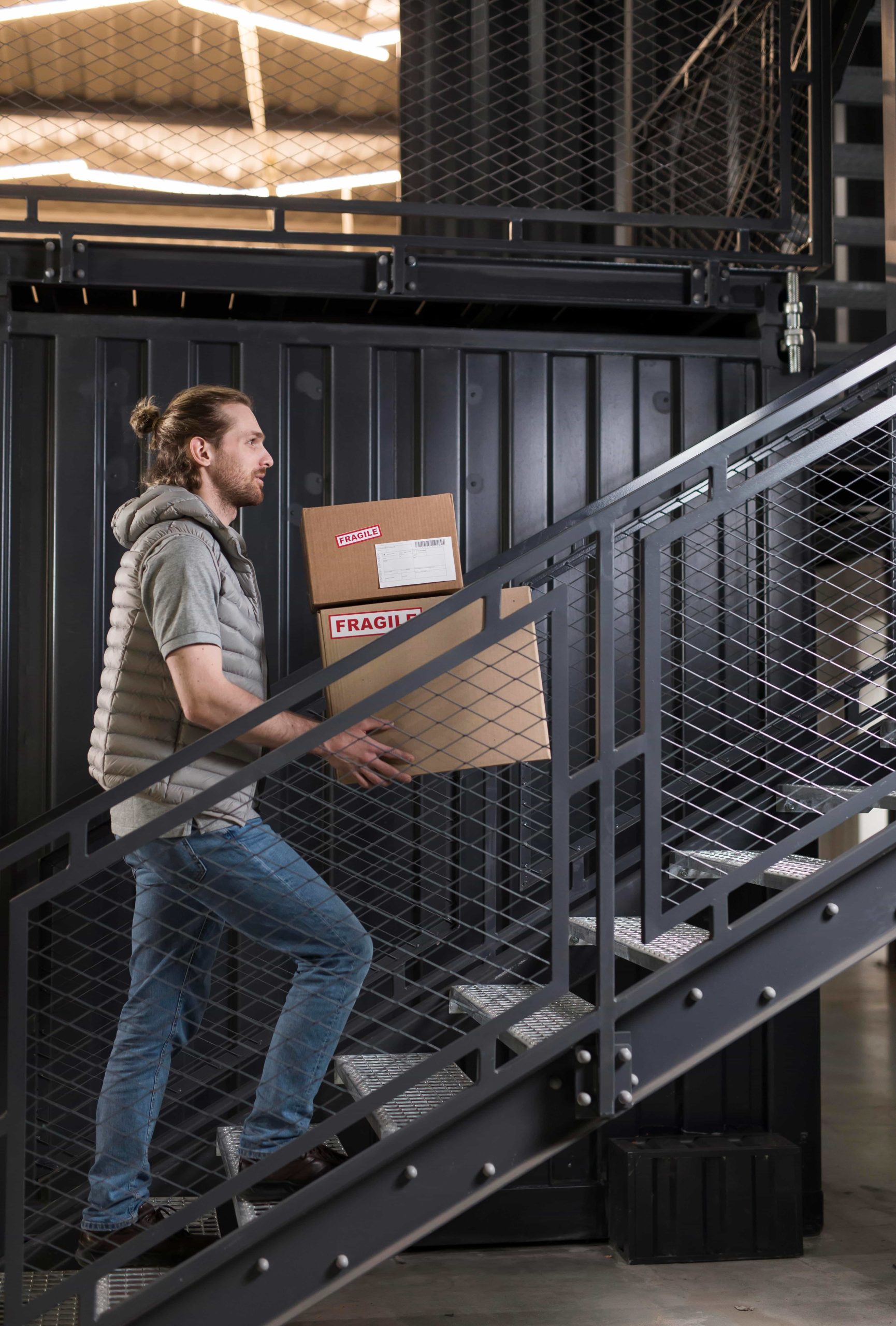
Moving into a flat in a building with no lift can seem, at first glance, like an overwhelming challenge. You can already picture stacks of boxes going up and down endless stairs, heavy furniture sliding across the steps, and a physical exhaustion that threatens to ruin the whole experience. But with the right planning, the right strategies, and professional support, that move can become a manageable, organized process. In this article you’ll discover how to tackle the challenge of elevator-free buildings successfully, using every tip to lighten the load, protect your belongings, and minimize the physical effort.
Throughout the article we’ll speak to you one on one, so you feel this is genuinely doable. This isn’t pure theory, but practical advice drawn from the experience of hundreds of moves in urban settings. Let’s get started.
Plan ahead and make a detailed inventory
The key to any tricky move is planning. When there’s no lift, time and organization become even more valuable. Before you start packing, spend a few hours creating a detailed inventory of everything you own. Sort items by category: books, dishware, clothing, electronics, flat-pack furniture, and so on. This not only helps you estimate the total volume, but also lets you decide what to move first and what you could leave for later.
As you build the inventory, assign an approximate box count to each category and write it down. For example, 10 boxes of books, 5 of clothing, 4 of kitchenware. That way you can communicate clearly with the removals company or with friends and family helping you, and avoid last-minute surprises.
Pick the ideal day and time for your move
In a building with no lift, every minute counts. That’s why it’s best to choose a day and time slot with the least possible traffic in your neighborhood. Weekend mornings tend to work best: fewer cars on the street, fewer neighbors coming and going, and more space to park the removals truck near the door.
On top of that, plan your move for a season with pleasant weather. Avoid rainy days or extreme heat; slippery stairs and physical effort in high temperatures raise the risk of accidents and wear out your helpers or crew.
Assess access and measure every passageway
Before the big day arrives, do a technical walk-through. Grab a tape measure and check the width of the stairs, the width of the doorways, the height between railings, and the space on landings. Note any obstacles: central columns, low railings, narrow landings.
With that information in hand, you’ll be able to determine which furniture needs to be disassembled in advance and which doors may need to be fully opened to let items through. For example, a wardrobe 2 m tall and 0.60 m wide will need to be broken down into its basic pieces to get around the turns in the stairwell.
Disassemble large furniture and protect every piece
One of the most effective tips for moving in buildings with no lift is to disassemble bulky furniture before the move. Beds, wardrobes, shelving, and extendable tables are far easier to carry down in light pieces than to lug down whole, risking damage to walls and corners.
To take things apart without losing pieces or screws, follow these steps:
- Organize each screw and part: use zip-lock plastic bags and label each one with the name of the furniture piece.
- Photograph each stage: before disassembling, take photos of the assembled piece to guide you later when you put it back together.
- Protect the surfaces: store large panels between blankets or cloths to avoid scratches.
As you disassemble, distribute the pieces across boxes or light pallets so you can balance the weight going up or down.
Use smart packing techniques
Good packing makes the difference in any move, but in a building with no lift it will save you from overloading yourself. Here are a few tricks:
- Small but sturdy boxes: it’s better to carry many small boxes (20–25 kg / roughly 44–55 lb max) than a few giant ones that exceed what you can lift.
- Reusable protective materials: use blankets, towels, and old clothes to wrap dishes and glassware instead of bubble wrap. You’ll cut down on waste and have soft items to protect with.
- Clear labeling: write “carry down first” or “carry down last” on each box by priority, and mark whether it’s fragile.
- Different-colored tape: assign a color to each floor so you instantly know which level to stop at.
With this kind of packing, every trip up and down becomes a predictable, safe operation.
Set up a support team and assign clear roles
Neither you nor your removals company should face the stairs alone. Ideally, have at least two extra people acting as support: one at the bottom of the stairs and one at the top. That way, whoever is carrying the large item down gets help balancing the weight and avoiding knocks.
Before you start, gather the team and explain the roles:
- Carrier: the person handling the furniture or box.
- Lower support: helps push and stabilize from below.
- Upper support: guides direction and holds from above.
- Coordinator: manages items coming in and out so the landings don’t get congested.
With this division of labor, everyone knows what to do and the flow stays steady.
Make use of tools and gadgets to ease the move
Technology that spares your back and keeps you safe does exist, and it’s worth investing in:
- Folding hand trucks: lightweight, with sturdy wheels, they make it easy to move stacked boxes to the bottom of the stairs.
- Hoists and pulley systems: handy for lowering appliances or heavy furniture through the window (as long as the building and regulations allow it). Hire professionals to rig these systems safely.
- Ergonomic carrying backpacks: let you move boxes and luggage with your back properly aligned.
Using these tools not only protects your health but speeds up the process.
Protect walls and railings with temporary padding
Narrow walls and railings are exposed to knocks during the move. To prevent scratches and chipped paint, place foam or corrugated cardboard protectors along the perimeter of the stairs. These are essentially adhesive foam strips that unroll to cover frequent contact points.
This simple step saves you from repainting and keeps your neighbors happy, since they won’t have to put up with the sound of touch-up brushwork after your move.
Coordinate breaks and rotate the crew
Carrying things up and down stairs demands intense physical effort. To keep the pace without overloading anyone, schedule planned breaks every 15–20 minutes. During the break, hydrate, adjust your straps or load, and check that each item is in the right position.
If you have several helpers, rotate positions: whoever goes down then goes up, to balance the muscular load and avoid excessive fatigue.
Keep constant communication with the team
In a space as confined as a stairwell, communication is crucial. Agree on verbal signals or clear gestures to indicate “stop,” “keep going,” or “turn.” Use a walkie-talkie or a hands-free intercom if noise or the distance between steps makes direct communication difficult.
Poor coordination can lead to falls or knocks, so invest in a signaling system everyone is comfortable with.
Plan disassembly and reassembly at the destination
Well before the move, picture how and where you’ll reassemble your furniture in the new home. If the new flat also has no lift, reuse the same disassembly plan you used before. If it does have one, coordinate reassembly on arrival so you don’t leave pieces lying around.
Either way, a disassembly-and-reassembly protocol avoids last-minute improvisation and helps you place each piece of furniture where it belongs without having to move it twice.
Consider specialized professional solutions
Even with all these tips, the complexity of many moves in buildings with no lift makes it worth bringing in specialized companies. Mudanzas Trallero offers:
- Crews trained in stairwell handling techniques.
- Professional lifting equipment and certified pulley systems.
- Tailored disassembly and packing services.
- On-site coordinators who manage permits and community relations in residential buildings.
With professionals, you free yourself from the physical and logistical stress, and you guarantee safety and speed.
Manage stress and look after your health during the move
Physical and mental effort can take their toll. To protect your wellbeing:
- Stay hydrated: bring bottles of cool water for the team.
- Take mindful breaks: stretch your back and legs, and control your breathing.
- Eat light: fruit, nuts, and energy snacks.
- Personal protection: use non-slip gloves, lumbar support belts, and reinforced footwear.
Health comes first; without it, the move doesn’t move forward.
After the move: inspection and upkeep
Once the move is done, take a moment to check walls and railings. If you followed the protection tips, there won’t be any scratches, but it’s worth confirming everything is intact. Also, hand any temporary protective materials back to the building for recycling.
And don’t forget to thank your team: a small gesture or a meal together strengthens relationships and creates a good atmosphere.
Trust your move to professionals who know stairs
Moving in a building with no lift can be quite a challenge, but with foresight, the right tools, a coordinated team, and above all the help of specialized professionals, you’ll achieve a safe, efficient, hassle-free move. Remember to plan every detail, protect walls and railings, disassemble large furniture, and take regular breaks.
If you’re looking for a team that masters stairwell moving techniques and offers a full-service solution, Mudanzas Trallero takes care of every detail so your no-lift move is a guaranteed success.




