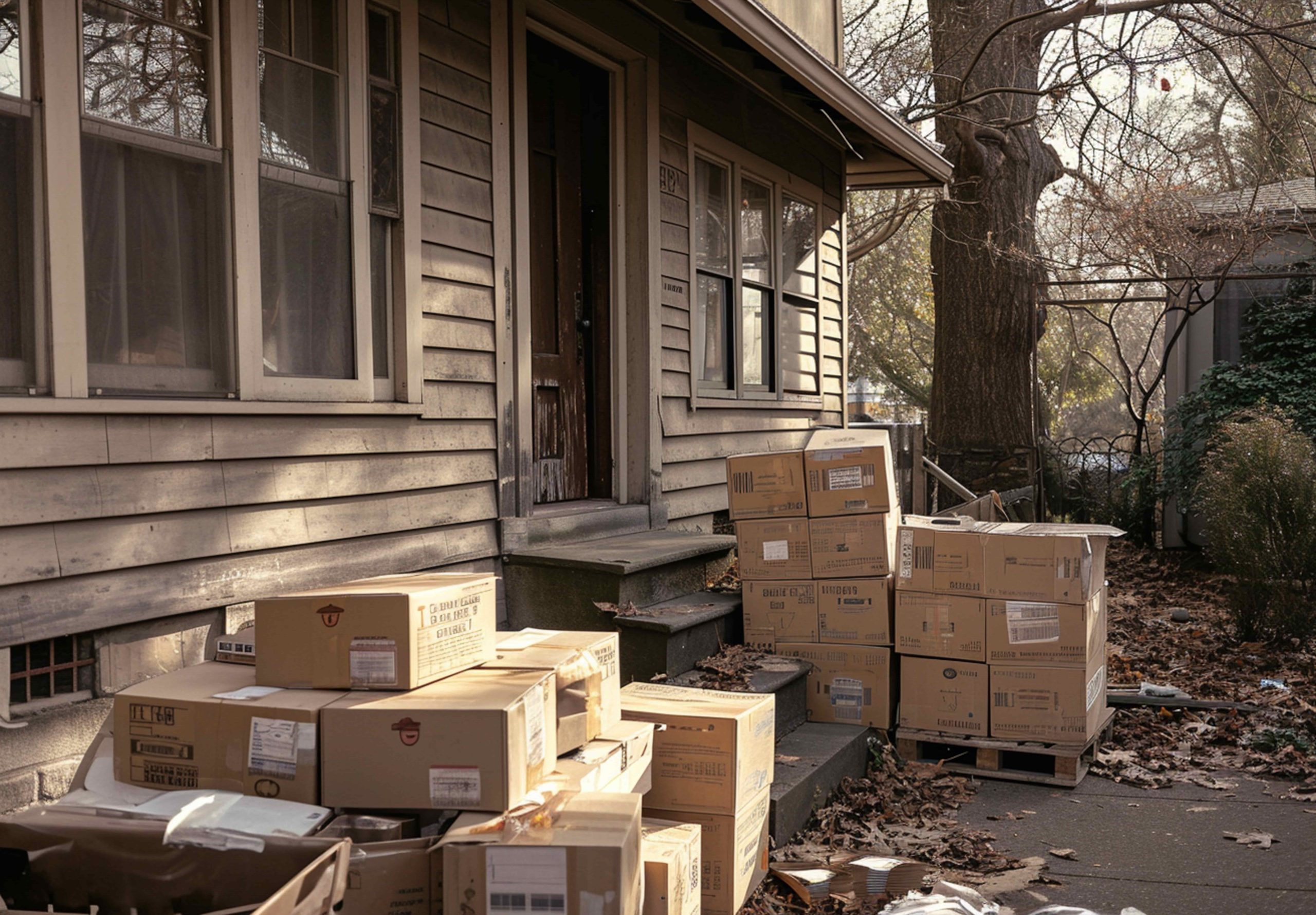
One morning you wake up and decide to swap traffic noise for birdsong, neon lights for a starry sky, and the urban rush for the calm of the countryside. The decision to move to a rural or remote area is exciting, liberating and completely transformative. But between your idyllic dream and the reality of your belongings waiting in boxes lies a logistical challenge that can turn into a real odyssey if you don’t plan it properly.
Moves to rural areas are not simply longer versions of urban moves. They are expeditions that require a completely different mindset, more thorough preparation and a degree of flexibility you rarely need when moving between cities. Out here there’s no GPS guiding you along optimised routes, no range of service companies open around the clock, and certainly none of the comfort of thinking “if something goes wrong, we’ll sort it out tomorrow”. In rural areas, tomorrow can be a very long way off, quite literally.
Geography as the lead role in your move
When you plan a move to a rural area, geography stops being merely the backdrop and becomes the main character in your story. Every kilometre (roughly 0.6 miles) counts, every bend matters, and every gradient can make the difference between a successful move and a logistical nightmare. Rural roads have personalities of their own: they can be narrow, winding, steep or simply unpredictable.
The first challenge is access. That country house you visited in your small city car can look very different when you try to reach it with a 12-metre (about 40-foot) removals lorry. Roads that seemed perfectly passable can turn out to be too narrow, with very tight bends or weight limits you hadn’t factored in.
Route planning becomes an art form. You can’t simply rely on standard navigation apps, because they often don’t reflect the real conditions of rural roads. It’s essential to scout ahead, contact local authorities and sometimes even coordinate with neighbours who know the quirks of the terrain. The time of year matters too: a road that’s perfectly passable in summer can become impassable in winter.
The challenge of distance and timing
Distance in rural areas isn’t measured only in kilometres, but in time, availability and options. When something goes wrong in the city, you have immediate alternatives. In a rural area, the nearest hardware shop may be an hour away, and if it’s Sunday it might be closed. This reality completely changes how you need to plan your move.
Transport times multiply, but not in a linear way. A move that would take 8 hours in the city can stretch to 12 or 14 hours in a rural area, not only because of the distance but because of reduced speeds on secondary roads, necessary rest stops and the added difficulty of manoeuvring in tight spaces.
Coordination becomes critical. In the city, if there’s a delay you can adjust on the fly. In a rural area, a delay can mean the services you need are no longer available, the weather changes, or you simply have to wait until the next day to resolve any issue. Punctuality isn’t just a courtesy here, it’s an operational necessity.
Infrastructure: adapting to local limits
Rural infrastructure plays by its own rules, and your move has to adapt to them, not the other way around. Road-width limits may force you to use smaller vehicles, which means more trips and more time. Weight restrictions can cap the load per trip, especially where there are old bridges or structurally limited roads.
The basic services you take for granted in the city may be unavailable or have limited opening hours. Petrol stations may close early, garages may not have spare parts on hand, and breakdown services can take hours to arrive. That means your move has to be more self-sufficient: carrying basic spares, extra fuel and tools you wouldn’t normally need.
Connectivity is a factor too. Mobile coverage can be patchy, which complicates coordination between teams. GPS may not work properly, and traditional addresses may not be enough. In rural areas it’s common for directions to be given by landmarks (“the blue house just past the big oak”), which calls for a far more detailed level of communication and coordination.
Specific preparation for the rural setting
Preparing for a rural move starts well before moving day. Research is essential: you need to know the exact access conditions, the infrastructure limits and the local particularities that can affect your move. That ranges from specific local regulations to local customs that can influence the availability of services.
Equipment has to be right for rural conditions: vehicles with suitable traction for uneven terrain, basic recovery gear in case of mechanical problems, and tools matched to the ground. It’s also important to carry extra supplies: spare fuel, water, food and backup communication systems.
Coordinating with local players is crucial. Contacting the town hall, getting to know your neighbours and building relationships with local service providers can make the difference between a smooth move and a frustrating experience. Local knowledge is priceless: knowing which roads to avoid at certain times of year, which services are available and how to reach help in an emergency.
The weather factor: when the climate calls the shots
In rural areas, the weather isn’t just a consideration, it’s a decisive factor that can completely shape your move. Rural roads are more exposed to bad weather and alternative routes are limited. Heavy rain can make a dirt track impassable, and snow can block access to certain areas entirely.
Weather planning has to be an integral part of your moving strategy. That means not only checking the forecast but understanding how specific conditions affect the routes you plan to use. A road that’s perfectly passable in normal conditions can become dangerous or impassable in rain, snow or even strong wind.
Flexibility with timing becomes essential. In an urban move you can allow a degree of rigidity in your schedule because conditions are more predictable. In a rural move you need wider time windows and backup plans for different weather scenarios. That might mean having alternative dates ready or even splitting the move into stages if conditions aren’t favourable.
Specialist teams and local know-how
Rural moves call for a specific kind of experience and knowledge that not every professional in the sector has. It’s not enough to know how to move furniture: you need experience navigating difficult terrain, an understanding of the quirks of rural infrastructure and the ability to adapt to changing conditions.
Local know-how is invaluable. Professionals with experience in the area know the quirks of the roads, the best routes for the season and the specific limits of each location. They also know the local players: from mechanics to authorities, including neighbours who can lend a hand when needed.
The ability to improvise and solve problems becomes crucial. In rural areas, problems aren’t solved with a call to a 24-hour helpline. They’re solved with creativity, practical knowledge and the ability to find solutions with the resources at hand. Professionals experienced in rural moves develop these skills over years of facing unique situations.
Technology tailored to rural conditions
Technology can be a great ally in rural moves, but it has to be the right technology, adapted to the specific conditions of these areas. Standard navigation systems can fall short, so you need to combine different tools: topographic maps, off-road navigation systems and specialist apps that account for the quirks of rural roads.
Communication systems need to be redundant. Because mobile coverage can be patchy, it’s important to have backup options: CB radios, satellite phones for emergencies and GPS positioning that works offline. Coordinating between teams becomes more complex when communication isn’t seamless.
Tracking vehicles and cargo takes on special importance. Real-time tracking systems let you know the exact location of the vehicles, their status and the condition of the load. This matters especially on long routes through remote areas, where a lack of regular communication can create uncertainty and logistical complications.
Basic services: preparing for self-sufficiency
One of the biggest differences between urban and rural moves is the level of self-sufficiency required. In the city, services are instantly available: fuel, food, mechanical help and emergency assistance. In rural areas, you may have to carry everything you need with you, because outside help can take hours to arrive.
Fuel planning is critical. Large vehicles use more fuel, and rural routes can be longer and more demanding. It’s essential to calculate your fuel needs accurately and identify the service stations along the route, bearing their opening hours in mind. Many rural petrol stations close early or have limited hours at weekends.
Emergency supplies are a must. Basic tools, common spares, a first-aid kit, water and non-perishable food should be standard kit. In the event of breakdowns, bad weather or simply long delays, these supplies can be the difference between a minor inconvenience and a genuinely difficult situation.
The value of a local support network
In rural areas, the local community can be your greatest asset during a move. Neighbours often know local conditions, the quirks of the roads and the best ways to reach specific spots better than anyone. Making contact with the local community before your move can provide valuable information and practical support.
Local authorities are important resources too. Rural town halls usually have detailed knowledge of local infrastructure, specific regulations and available services. They can advise you on the permits you need, any temporary restrictions and local resources that may be useful during your move.
Local service providers can be crucial allies. From mechanics to electricians, and from fuel suppliers to breakdown services, building relationships with these professionals before you need them can save you time and trouble. In rural areas these services can be limited, so it’s important to identify them and get in touch in advance.
Financial planning: the specific costs of rural moves
Rural moves tend to carry specific costs that don’t appear in urban ones. Greater distances mean more fuel, more working time and possibly more wear on vehicles. Access conditions may call for specialist equipment or extra vehicles, pushing costs up.
Opportunity costs are significant too. Longer transport times mean professional crews need more time to complete the move, which can translate into higher charges. On top of that, the limited availability of services in rural areas can mean extra costs to bring in resources from urban centres.
Contingency planning should include a budget for the unexpected. In rural areas, problems can be more expensive to solve because of the limited availability of services and the need to bring in resources from farther away. It’s advisable to add a 15-20% buffer to your budget to cover possible contingencies.
Make the most of specialist experience for your rural move
Moves to rural areas are a unique challenge that calls for specific experience, detailed planning and the ability to adapt to changing conditions. The difference between a successful move and a frustrating experience often comes down to choosing the right professional team, one that understands the particularities of these specialist operations.
Mudanzas Trallero has the experience and specific know-how needed to manage moves to rural and remote areas. Our team understands the unique challenges of these operations: from planning specialist routes to coordinating with local resources and adapting to limited infrastructure. With years of experience in complex moves, we offer the peace of mind of knowing your rural relocation is in the hands of professionals who understand that every kilometre counts and every detail matters. Discover how we can make your dream of moving to the countryside a reality, and plan your rural move with the confidence that only specialist experience can bring.