Before you dive into boxes and carols, hold on to this idea: a Christmas move isn’t something you “survive,” it’s something you design. In this article you’ll see how to turn December’s typical chaos into a plan that protects your energy and household harmony. We’ll cover how to choose which celebrations to keep and which to simplify without guilt, how to build a realistic calendar with room for the unexpected, how to pack without losing the magic (or breaking ornaments), how to manage kids, pets and visitors when your home is half-done, and how to land in your new place without demanding perfection. You’ll also pick up emotional-logistics tricks: small rituals that sustain the festive mood even while you’re surrounded by boxes.
Christmas + moving: the combination that works… if you turn it into a strategy
When your move coincides with Christmas, the problem isn’t that “there’s no time”; the problem is that there are too many expectations. You expect to celebrate as always, keep working, do the shopping, keep the house presentable and, on top of that, pack your life into boxes. The key insight is accepting that December is a month of emotional peaks: nostalgia, commitments, rushing, spending and a lot of social interaction. If you don’t factor that in, the move becomes a stress multiplier. If you do factor it in, you can use it in your favor: Christmas already brings structure (dates, routines, meals), and that structure can become your planning framework.
Your goal isn’t to do “everything,” but to sustain what matters. Think of it as a balance between two stories: the practical story (boxes, transport, keys) and the emotional story (family, tradition, calm). If both are in the plan, they don’t compete; they support each other. This is where having professional support adds a lot, because it frees you from the heavy logistics and leaves you energy for what money can’t buy: feeling okay.
Decide your “minimum viable Christmas” and gain peace of mind instantly
There’s one tip that changes the game: define your “minimum viable Christmas.” It’s not giving up, it’s choosing. It means answering, honestly, this question: “Which three things make me feel it was really Christmas, even in the middle of a move?” For some it will be dinner at home (even a simple one), for others the tree, for others a stretch of movie-and-blanket time, or a walk among the lights. The rest is accessory, and in a Christmas move, the accessory becomes an energy thief.
Once you define it, write it down and share it with whoever lives with you. It sounds simple, but it cuts down arguments because it stops being a war of assumptions (“I thought we were going to…”) and becomes an agreement. It also lets you make fast decisions: if something doesn’t contribute to your minimum viable Christmas or to the move, it doesn’t go on the agenda. And yes, that includes social commitments: you don’t have to say no to everything, but you can change the format. A short visit or a coffee can replace an endless meal without the world falling apart.
The realistic holiday calendar: don’t plan days, plan “windows”
In December, the days look free… until they fill up. That’s why, in a Christmas move, it works better to plan by windows: blocks of 30–60 minutes with a clear mission. Packing an entire wardrobe is too abstract; “packing shoes and bags” is concrete. The key is for each window to end with a sense of closure. That feeling keeps you motivated, and at Christmas motivation burns fast because your surroundings keep pulling at you.
Another uncommon tip: create a “buffer day” with no moving tasks. Yes, even if you’re cutting it close. It’s the day that absorbs the unexpected without breaking you. It can be the 24th, the 25th or the 31st, or simply one afternoon. That margin avoids the classic scenario of “we’re running late, so we pack while angry.” And when you pack angry, more breaks and more arguments happen.
If your move has phases (packing, loading, transport, unloading), ideally the most social day (say, Christmas Eve or New Year’s Eve) shouldn’t fall on the most physical day. If you can’t avoid it, shrink that day’s scope: don’t do “difficult boxes” or dismantle large furniture; save light tasks like labeling or grouping.
The home base camp: one untouchable room to breathe
This is the tip that surprises people most because it doesn’t sound like “moving advice,” but it’s holiday survival: set aside one untouchable room. A space where no boxes pile up. It can be the bedroom, a small sitting room or even a marked-off corner. That’s where you eat, rest and slow down. In a month with so much stimulation, you need a place that reminds you that you’re still in control.
The untouchable room also reduces mental clutter. When everything is packed, your brain goes into “constant alert” because it can’t find reference points. That state triggers irritability. Having a stable spot acts as an anchor, and household harmony is grateful for it.
Also, define a “clean hallway”: the route from the door to the loading area, free of boxes, loose rugs and bags. At Christmas there’s more temporary clutter (gifts, food, bags), and accidents happen through accumulation. A clean hallway means safety and calm.
The Christmas packing ritual: protect memories without dimming the magic
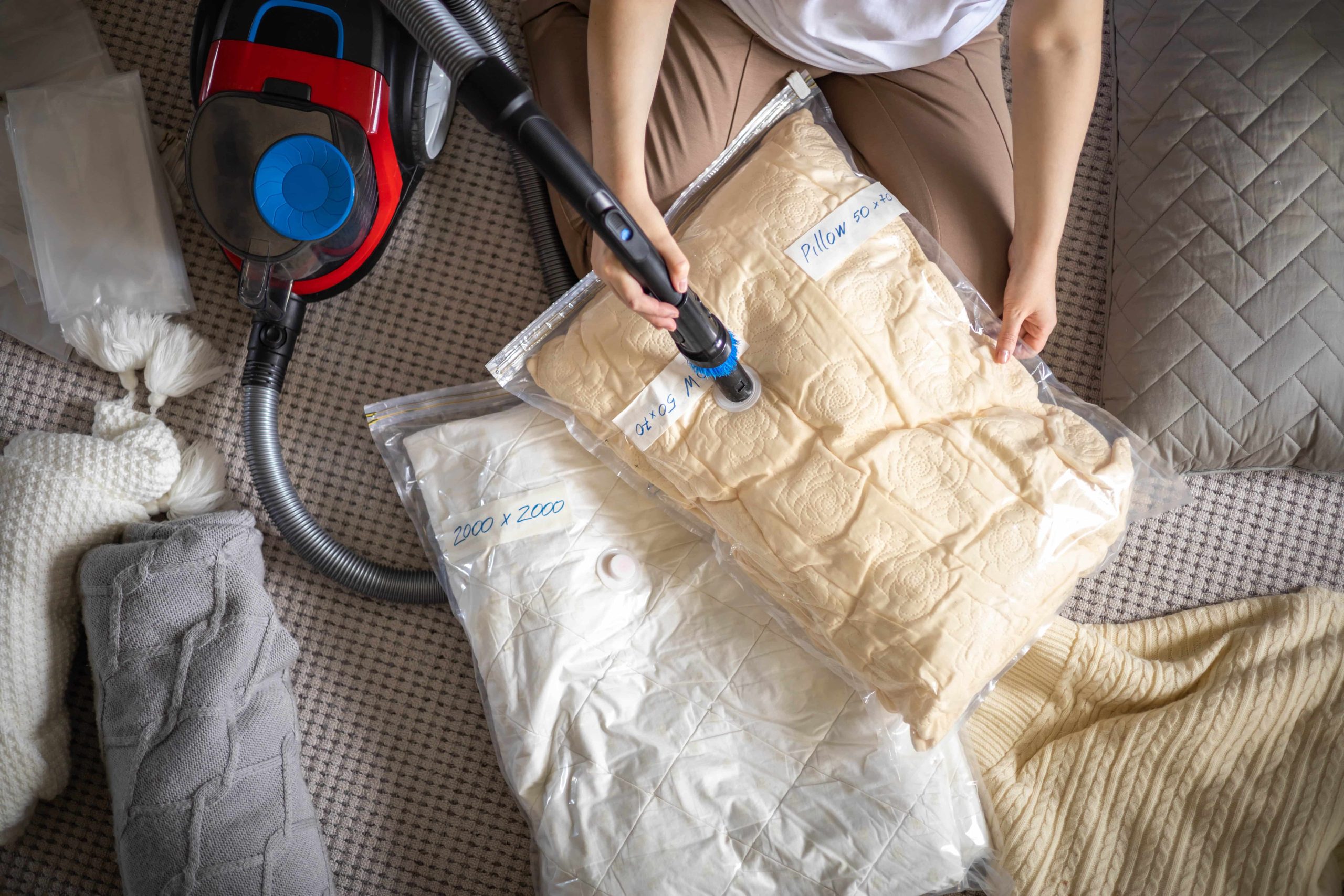
Christmas decorations are fragile, but above all they’re emotional. If you pack them roughly, not only might they break; it can also give you that sense of loss that sours the whole process. Here’s a fresh approach: turn decoration packing into a short, gentle ritual. Put on music, prepare a “CHRISTMAS” box and pack in layers, carefully. Don’t rush it on the last day, because rushing is the enemy of anything delicate.
Keep in a separate bag whatever you want to keep using until the end: a garland, a candle, a small figurine. Your home can be half-empty and still feel festive if you keep two or three elements out. It’s an emotional trick: it reminds you that not everything is on pause.
For practical packing, label with intention. “Christmas” isn’t enough; write “Christmas – open first.” Add a mini-list inside the lid (“lights, star bauble, ribbon”). That way, when you arrive, you won’t have to open five boxes to find the tree basics.
The “holiday kit” and the “48-hour kit”: your lifesaver in the new home
If there’s one thing that prevents stress explosions, it’s finding the essentials without searching. Prepare two kits: a 48-hour one and a holiday-specific one. The 48-hour kit lets you live: hygiene, clothes, medication, chargers, documents, a mug, some coffee or tea, basic tools. The holiday kit lets you celebrate without chaos: two glasses, a corkscrew, napkins, a small tablecloth, a garland, an extra trash bag, and a symbolic touch (something you enjoy looking at).
The magic isn’t in having everything set up; it’s in being able to sit down for a moment and raise a toast without feeling that “there’s no Christmas.” With these kits, even with the house half-done, you can create a moment of normality.
And watch out for a typical mistake: putting the chargers in “office” boxes. Don’t. Chargers, keys, documents and medication travel with you, always.
Kids, pets and visitors: make the environment predictable
At Christmas, kids are wound up over presents and disrupted routines. Add a move on top, and their behavior can get more intense. The tip isn’t “have them help more,” but to give them a clear, short role. Something they can finish: sticking on colored stickers, choosing what goes in their personal box, preparing their “first-night backpack.” That gives them control and reduces tantrums born of uncertainty.
With pets, the goal is to minimize changes on the key day: food, walks, resting spot and, if you can, keeping them in a quiet space while loading happens. An unsettled animal complicates everything. Prepare their kit as if they were another family member: food, water bowl, pee pads if needed, and their blanket.
Holiday visitors are another delicate point. A very useful tip: communicate your “visit format” in advance. Something as simple as “come for an hour, no obligation to stay for a meal” or “better if we meet outside.” If you don’t, people arrive with expectations and you feel bad for not meeting them. And it’s not your fault: it’s logistics.
Smart meals: cook less, enjoy more
When you’re in the middle of a move, cooking becomes a burden. And at Christmas, the kitchen can turn into the center of stress. The solution isn’t “eat anything,” but to plan smart meals: simple dishes that feel festive without hours of preparation. Think sheet-pan bakes, hearty salads, cheeses, good bread, a hot soup. You can even turn it into a new tradition: a “Christmas-move dinner,” lighter and with less pressure.
Another tip: keep basic plates and cutlery handy in a “KITCHEN – TODAY” box. If you end up eating on the floor among boxes, at least make it easy and without washing up half the house.
The arrival: make the house livable before you make it pretty
This is where calm is won or lost. When you get to the new home, your mission is to make it livable: beds assembled, bathroom working, a spot with pleasant light, and a place to eat. If you try to open every box, you overwhelm yourself and start the year at odds with your new space.
An approach that works very well is choosing “one finished room.” Not the whole house: one. It can be the bedroom or a small sitting room. Finishing one space gives you a sense of achievement and lowers anxiety. It also creates a refuge, just like the untouchable room in your old home.
In Christmas moves, this tip is even more powerful: even with the rest still pending, having a corner with a garland, a warm light and your holiday kit creates emotional continuity. You’re not “under construction”; you’re moving into a fresh start.
Household harmony: your move is managed with rules, not willpower
Willpower runs out, especially in December. That’s why what keeps you calm isn’t “being patient,” but having simple rules. Rule number one: “ask before moving.” Avoid the drama of “where’s the box with…?” Rule number two: “if you open it, you finish it.” Opening a box and leaving it half-done creates mess and a sense of chaos. And rule number three: “daily close.” At the end of the day, 10 minutes to tidy up, take out the trash and leave a breathable zone.
Another valuable tip: avoid big decisions at night. During a move, you’re tired at night and everything looks worse. If something needs deciding (which furniture goes where, what stays, what gets tossed), push it to the next day. The difference will surprise you.
Making it easy is a decision too
There’s a point where being practical is an act of self-care. If you want to balance the move and the holidays without December steamrolling you, leaning on professionals may be the missing piece, and with Mudanzas Trallero you can organize it with more peace of mind. Want a personalized quote for your move? Click here