
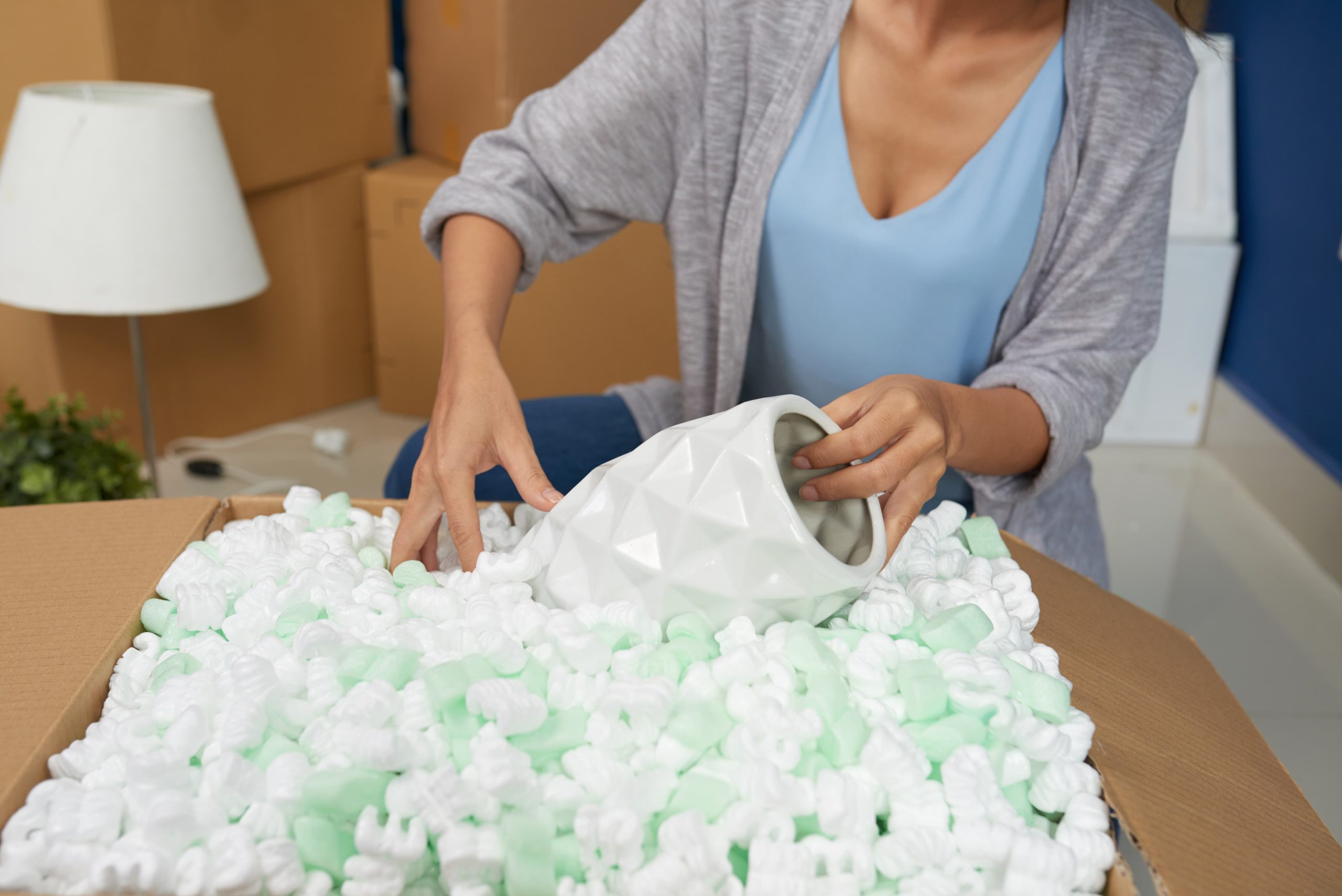
Dishes are the last thing you pack and the first thing you miss. They are also, by a wide margin, what breaks most often when packed in a rush the night before. If you are packing dishes for a move, a few simple materials and a couple of well-applied rules are all you need.
You do not need complicated techniques. You need nothing to shift inside the box and nothing to weigh more than it should.
How to pack dishes for a move without breaking anything
Packing dishes for a move means wrapping each piece separately, placing it in a small, sturdy box and filling the gaps so nothing moves during transport. That is the whole secret; the rest is detail.
To start, set aside small or medium boxes for the kitchen. A large box full of plates is too heavy, loses its shape and eventually gives way at the bottom. As a guide, many packing resources recommend keeping boxes of fragile items under 20 kg (about 44 lb).
Reinforce the bottom with tape in a cross shape and lay down a layer of crumpled paper or bubble wrap before placing the first piece. That base cushions the knocks when the box rests on the floor of the van.
Plates, glasses and stemware: each piece has its trick
Plates travel best on their edge, standing upright, like records on a shelf. Wrap each one in paper and place them together, leaving no air between them. Set this way, a plate withstands pressure far better than when stacked flat.
With glasses, tuck a ball of paper inside before wrapping the outside. Pack them upside down, in the top of the box, where they take the least weight.
Stemware is the most delicate glassware you have. Protect the stem first, which is where they tend to snap, and then wrap the bowl. If you have a lot of good stemware, cardboard cell dividers for boxes are a small investment that pays off.
And serving dishes, salad bowls or large pieces? They go at the bottom, with extra protection, and never on top of anything fragile.
Filling, sealing and labelling
When you finish filling the box, give it a gentle shake. If you hear anything, it needs more padding. Crumpled paper, kitchen cloths or even towels work to fill the gaps and, as a bonus, you pack something you had to bring anyway.
Seal the box and write on at least two sides “Fragile”, the destination room and the orientation with an arrow pointing up. That way whoever lifts it knows how to handle it without opening it.
A tip from experience: set aside a small separate box with two or three plates, glasses and sets of cutlery for the first few days. That way you do not have to unpack the whole kitchen on the first night.
Discover more tips to protect your belongings
Dishes are a good example of something that looks simple yet causes trouble when packed without a method. At Mudanzas Trallero we often see how a few extra minutes with paper and tape prevent breakages that cannot be fixed afterwards.
If you would rather spend your time on other things, you can also leave the kitchen packing and your whole move in the hands of the Mudanzas Trallero team when you organise your local move. And if you decide to do it yourself, our website has useful information for packing dishes and other fragile items with confidence.




